
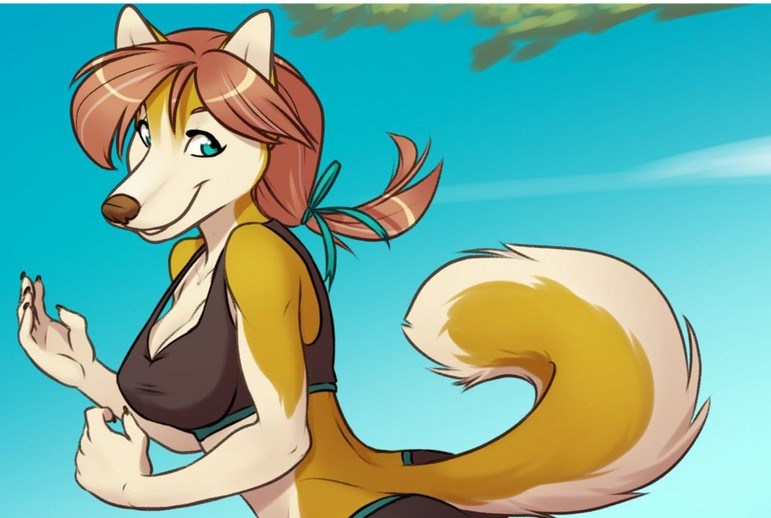
Furry art didn’t become popular because someone decided it should. It didn’t launch with a marketing push or a clear audience in mind. It showed up online the same way a lot of internet culture does: one drawing at a time, shared between people who felt more comfortable inventing characters than copying reality.
Early on, most furry artists weren’t trying to build a movement. They were just experimenting. Drawing animals with human posture felt more expressive than drawing people. It allowed exaggeration without apology. If a character needed oversized eyes to feel emotional, no one argued. If proportions didn’t make anatomical sense, that was fine. The point was feeling, not accuracy.
The internet gave that kind of experimentation space to exist without needing approval.
Why Fantasy Was Always the Point
What separates furry art from other character styles is that fantasy isn’t optional. It’s baked in from the start.
These characters aren’t designed to resemble real people. They aren’t meant to be aspirational or realistic. They’re built to communicate personality as quickly as possible. Ears tilt to suggest mood. Tails become emotional signals. Fur color says more about temperament than biology ever could.
Because everything is fictional, artists don’t have to worry about comparison. No one is asking if a character looks like someone else. No one is measuring bodies against real standards. That freedom makes the work feel lighter and, oddly, more honest.
Online spaces reward that honesty. Images that communicate emotion instantly travel further than ones that aim for perfection.
Community Did the Heavy Lifting
Furry art didn’t evolve in isolation. It evolved through feedback loops.
Artists posted sketches. Others responded. Designs changed. Characters were redrawn again and again. This wasn’t treated as indecision. It was treated as normal. Characters were allowed to grow alongside the people creating them.
Over time, shared visual language formed. Certain styles became recognizable. Others faded. New ones replaced them. None of this was planned. It happened because people kept showing up and responding to what resonated.
This is still how furry spaces operate today. Art isn’t static. Characters aren’t fixed. Everything is a work in progress, and that openness keeps people engaged.
Fiction Creates Distance, and Distance Creates Comfort
One reason furry culture works so well online is that it creates distance from real identity.
When a character is fictional, people relax. There’s no fear of misrepresentation. No concern about someone’s real face being taken out of context. No pressure to explain how a design connects to real life.
That distance matters more now than it did years ago. The internet is more permanent. Images spread faster. Context disappears easily. Fiction keeps things contained.
This applies to adult fantasy as well. Fictional-only spaces, including those that reference these often emphasize imagination rather than realism for exactly this reason. The focus stays on character design and fantasy instead of pulling real people into the equation.
Custom Characters Change the Relationship With Art
Furry art isn’t something most fans just scroll past. Many people commission characters, build backstories, and keep those characters for years. A design becomes personal. It evolves. It reflects changing interests or moods.
This changes how people interact with art. They aren’t just consuming images. They’re participating in creation. That participation builds attachment and keeps communities active.
Digital tools lowered the barrier to entry, which only expanded this effect. You don’t need formal training to sketch ideas or develop a character concept anymore. Taste and imagination go a long way.
Its Influence Spilled Outside the Fandom
You can see furry art’s influence well beyond furry spaces now. Expressive avatars, exaggerated proportions, and personality-first design show up in games, social apps, and digital illustration everywhere.
The idea that a character doesn’t need realism to feel relatable has become mainstream. Furry artists understood that early on. They proved that abstraction can communicate emotion faster than detail.
That lesson stuck.
Why It Keeps Working
Furry culture continues to grow because it offers something the modern internet often lacks: creative freedom without comparison.
There’s no expectation to look a certain way. No need to match reality. Engagement is based on imagination, not evaluation. People respond to how a character feels, not how closely it resembles anything real.
As online spaces become more crowded and more performative, styles that prioritize expression tend to last. Furry art does exactly that.
It isn’t defined by controversy. It isn’t driven by shock. It survives because it makes room for creativity, experimentation, and characters that don’t have to answer to the real world.
That’s why it found a home online—and why it’s likely to stay there.
Now time to promote Gretta Grand
This is completely irrelevant to the subject of big natural tits. Why post it? Marketing revenue or something?
Yes